A room with too little light, or too much, is uncomfortable and you feel it before you can explain it. Vastu wellness architecture is the 5,000-year-old study of exactly that: how proportion, orientation, light, air, and material change how a space feels to live in.
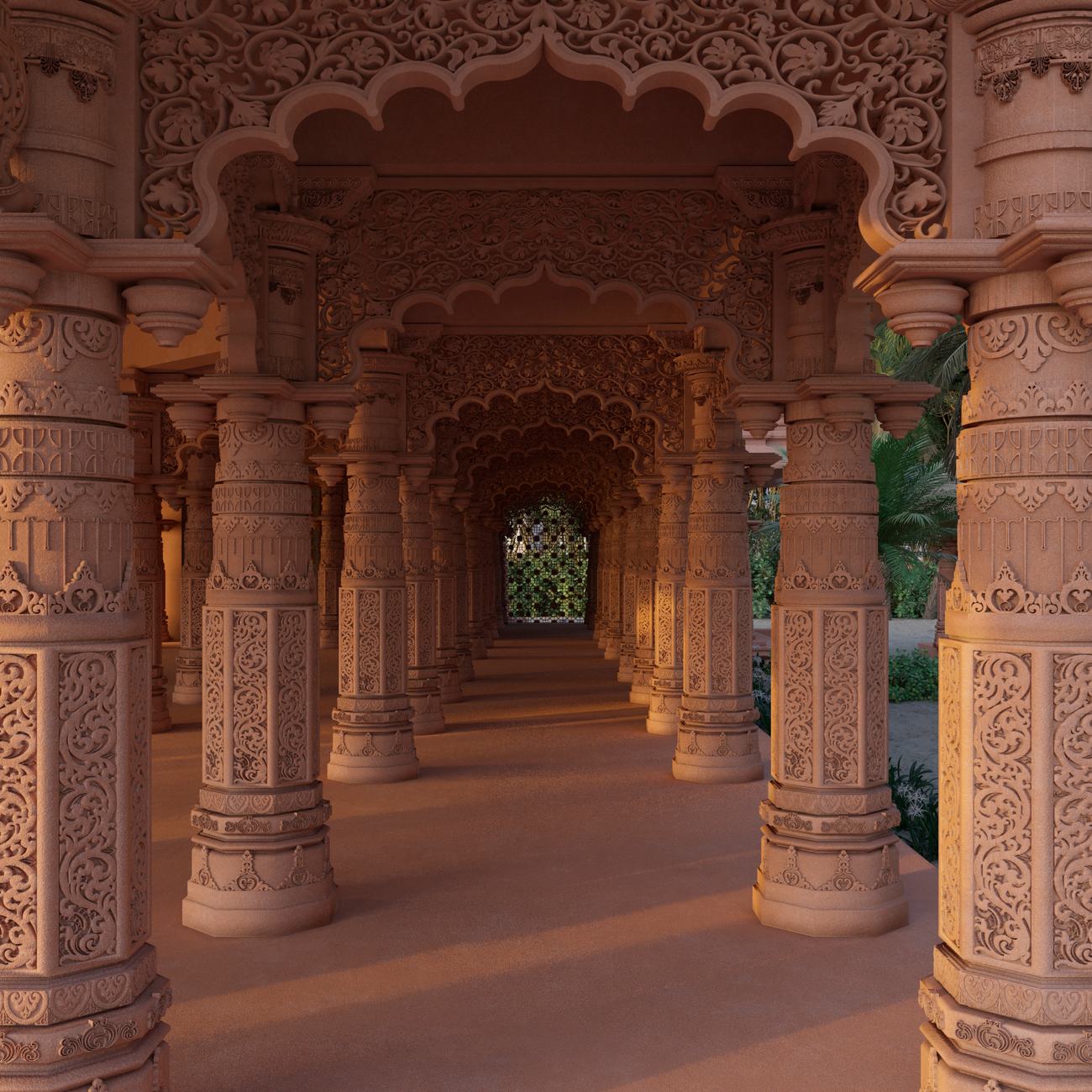
The Temple Colonnade · Architectural Rendering
What it affects
- Sleep quality
- Meditation and focus
- Rest and recovery
- Digestion
- Romance and joy
The principles
- Proportion and symmetry, following natural order
- Natural materials, because they behave the way nature behaves
- Free movement of light, air, and heat through a space
- The five elements kept in balance: earth, water, fire, air, and space
- Every room proportioned for what actually happens in it
Where modern science agrees
- Circadian rhythm: buildings aligned to the sun’s daily cycle support sleep and hormones
- Light placement: windows positioned for the quality of light at each hour, not just the view
- Temperature: sun exposure planned for warmth in the morning and cool at night, with the harshest midday light blocked
How DEVA builds it
Every structure on the island follows Vastu from the ground up, which is why it cannot be retrofitted onto an existing resort. The materials serve the same end: hand-carved Indian stone, Mayan chukum plaster, basalt reinforcement instead of iron, and geopolymer concrete. No off-gassing, no microplastics, no rust.